
This vegan Bolognese isn’t about trying to imitate meat but celebrating the deep, earthy umami that mushrooms and caramelized vegetables can bring to the table. It’s a slow-simmered hug of flavors that feels surprisingly hearty, even without the usual meat-based richness.
What drew me to this recipe was how it transforms humble ingredients into something that tastes complex and satisfying. It’s kind of a kitchen revelation—no soy, no gluten, just honest, untapped savoriness that makes every bite feel like a small triumph.
Making this dish has become my go-to when I want something cozy but still want to keep it plant-based. It’s all about patience—letting those mushrooms really caramelize and develop flavor—so each spoonful hits with a smoky, oozy richness that surprises even seasoned vegans.
Focusing on the untapped umami of mushrooms and caramelized veggies to create a rich, meaty texture without soy or gluten.
The story behind this recipe
- This recipe came together out of a need to make something comforting that used what I had on hand—lots of mushrooms, a few stray vegetables, and a craving for slow, soulful cooking. It’s funny how the simplest ideas—caramelized onions, simmered mushrooms—can turn into a dish that feels like a warm hug after a long day.
- I remember the first time I made it; the smell of garlic and thyme filling the kitchen sparked this nostalgic feeling, like I was revisiting a childhood meal I’d never had. It’s become a way to reconnect with flavors I loved growing up—savory, rich, and slightly smoky—without relying on processed or fake ingredients.
- story_type
- paragraph
Ingredient breakdown: key components
- Mushrooms: I love using a mix of cremini and shiitake for depth—when they release that earthy aroma, it’s pure kitchen magic. You can swap in portobellos if you want a meatier texture, but don’t skip the browning to get that caramelized punch.
- Onions & Carrots: Caramelized onions bring sweetness, while carrots add a subtle earthiness. Let those onions turn a deep golden—skip the rush, it’s what builds the base flavor. If you’re in a hurry, dice small for quicker browning.
- Tomato Paste & Crushed Tomatoes: I add a generous spoon of tomato paste early on—it gets all oozy and smoky. For a fresher flavor, use good-quality canned crushed tomatoes, but a splash of red wine vinegar at the end brightens it right up.
- Herbs & Spices: Thyme and bay leaves give that classic aroma—smell it bloom as they cook. If you like a smoky note, sprinkle a pinch of smoked paprika, but keep it subtle to let the vegetables shine. Fresh basil stirred in at the end feels like a little burst of summer.
- Olive Oil & Seasoning: I lean on a good splash of olive oil for richness—look for a fruity, peppery one. Salt and black pepper are your best friends—taste as you go, especially after simmering, to balance the acidity and depth.
- Optional: A splash of balsamic vinegar or a dash of nutritional yeast can add extra layers—think of it as the finishing touch that pulls everything together, making the sauce feel even more soulful and rounded.
Spotlight on key ingredients
Mushrooms:
- I love using a mix of cremini and shiitake for depth—when they release that earthy aroma, it’s pure kitchen magic. You can swap in portobellos if you want a meatier texture, but don’t skip the browning to get that caramelized punch.
- Onions & Carrots: Caramelized onions bring sweetness, while carrots add a subtle earthiness. Let those onions turn a deep golden—skip the rush, it’s what builds the base flavor. If you’re in a hurry, dice small for quicker browning.
- Tomato Paste & Crushed Tomatoes: I add a generous spoon of tomato paste early on—it gets all oozy and smoky. For a fresher flavor, use good-quality canned crushed tomatoes, but a splash of red wine vinegar at the end brightens it right up.
Onions & Carrots:
- Herbs & Spices: Thyme and bay leaves give that classic aroma—smell it bloom as they cook. If you like a smoky note, sprinkle a pinch of smoked paprika, but keep it subtle to let the vegetables shine. Fresh basil stirred in at the end feels like a little burst of summer.
- Olive Oil & Seasoning: I lean on a good splash of olive oil for richness—look for a fruity, peppery one. Salt and black pepper are your best friends—taste as you go, especially after simmering, to balance the acidity and depth.
- Optional: A splash of balsamic vinegar or a dash of nutritional yeast can add extra layers—think of it as the finishing touch that pulls everything together, making the sauce feel even more soulful and rounded.
Notes for ingredient swaps
- Mushrooms: I love using a mix of cremini and shiitake for depth—when they release that earthy aroma, it’s pure kitchen magic. You can swap in portobellos if you want a meatier texture, but don’t skip the browning to get that caramelized punch.
- Onions & Carrots: Caramelized onions bring sweetness, while carrots add a subtle earthiness. Let those onions turn a deep golden—skip the rush, it’s what builds the base flavor. If you’re in a hurry, dice small for quicker browning.
- Tomato Paste & Crushed Tomatoes: I add a generous spoon of tomato paste early on—it gets all oozy and smoky. For a fresher flavor, use good-quality canned crushed tomatoes, but a splash of red wine vinegar at the end brightens it right up.
- Herbs & Spices: Thyme and bay leaves give that classic aroma—smell it bloom as they cook. If you like a smoky note, sprinkle a pinch of smoked paprika, but keep it subtle to let the vegetables shine. Fresh basil stirred in at the end feels like a little burst of summer.
- Olive Oil & Seasoning: I lean on a good splash of olive oil for richness—look for a fruity, peppery one. Salt and black pepper are your best friends—taste as you go, especially after simmering, to balance the acidity and depth.
- Optional: A splash of balsamic vinegar or a dash of nutritional yeast can add extra layers—think of it as the finishing touch that pulls everything together, making the sauce feel even more soulful and rounded.
Equipment & Tools
- Large skillet or Dutch oven: To cook the vegetables and sauce evenly.
- Wooden spoon: For stirring and scraping flavor from the pan.
- Sharp knife: To chop vegetables and garlic precisely.
- Measuring cup: To measure liquids accurately.
Step-by-step guide to vegan Bolognese
- Gather your equipment: a large heavy-bottomed skillet or Dutch oven (for even heat distribution), a wooden spoon (for stirring), a sharp knife (for chopping), and a measuring cup (for liquids).
- Heat 2 tablespoons of olive oil over medium heat (about 160°C / 320°F). Add chopped onions and carrots. Cook, stirring occasionally, until the onions turn a deep golden brown, about 15 minutes. This caramelizes the sugars and builds flavor.
- Push vegetables to the side of the pan. Add a handful of sliced mushrooms (about 250g). Let them sit undisturbed for 2-3 minutes to develop a crust, then stir and cook until browned and no longer spongy, another 8-10 minutes.
- Stir in 2 tablespoons of tomato paste. Cook for 2 minutes until it darkens slightly and becomes fragrant, then add 3 crushed garlic cloves. Cook for another minute until garlic is fragrant but not burnt.
- Pour in 1 can (400g) crushed tomatoes and 1/2 cup vegetable broth. Add a sprig of thyme and a bay leaf. Bring to a simmer, then reduce heat to low (about 90°C / 194°F). Let it simmer gently, uncovered, for 30-40 minutes, stirring occasionally.
- Remove the bay leaf and thyme sprig. Taste and adjust salt and pepper. If the sauce is too thick, add a splash more broth; if too thin, simmer for a few more minutes until it thickens. For a smoky note, stir in a pinch of smoked paprika at the end.
- Rest the sauce for at least 10 minutes off heat. This allows flavors to deepen. Serve over your favorite pasta, garnished with chopped fresh basil or parsley if desired.
Let the sauce rest off heat for 10 minutes. Serve over cooked pasta, garnished with fresh herbs for a bright finish.
How to Know It’s Done
- Vegetables are deeply caramelized and fragrant.
- Mushrooms are browned and no longer spongy.
- Sauce has thickened slightly, with a rich, earthy aroma.
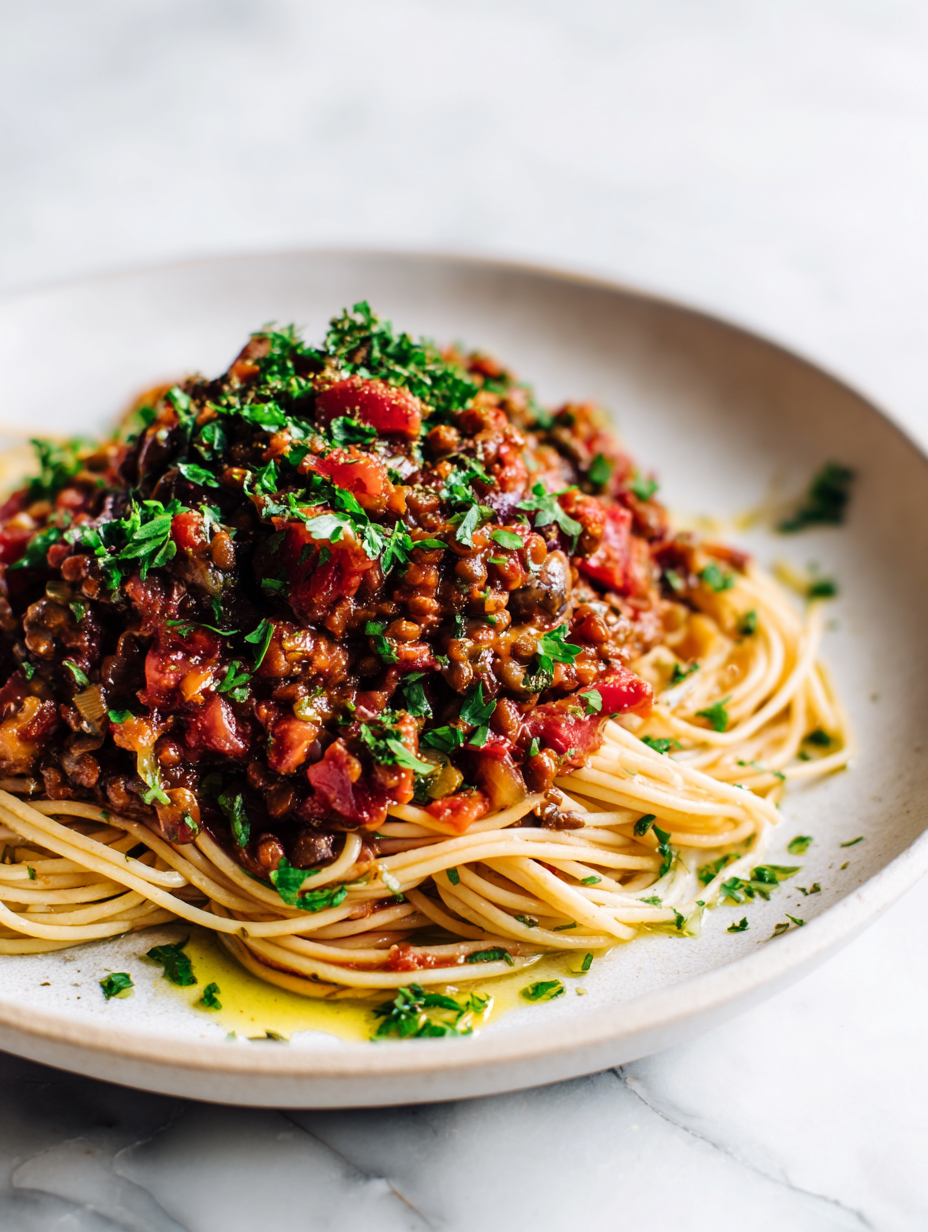
Vegan Mushroom Bolognese
Ingredients
Equipment
Method
- Heat the olive oil in a large skillet or Dutch oven over medium heat until it shimmers and begins to bubble softly.
- Add the diced onion and carrots to the hot oil. Cook, stirring occasionally, until the vegetables are deeply golden and fragrant, about 15 minutes. The onions should be caramelized and the carrots softened.
- Push the vegetables to one side of the pan. Add the sliced mushrooms to the empty side and let them sit undisturbed for 2-3 minutes to develop a crust. Then, stir and cook until browned and no longer spongy, about 8-10 minutes.
- Stir in the tomato paste and cook for 2 minutes, allowing it to darken slightly and become fragrant, which intensifies its smoky flavor.
- Add the minced garlic and cook for another minute until fragrant, ensuring it doesn’t burn.
- Pour in the crushed tomatoes and vegetable broth. Add the fresh thyme sprig and bay leaf. Bring the mixture to a gentle simmer, then reduce the heat to low and let it simmer uncovered for 30-40 minutes, stirring occasionally, until the sauce thickens and deepens in flavor.
- Remove the thyme sprig and bay leaf. Taste the sauce and season with salt and black pepper as needed. For extra smokiness, stir in a pinch of smoked paprika if desired.
- Let the sauce rest for a few minutes off the heat to allow flavors to deepen. Serve over your favorite cooked pasta, garnished with chopped fresh basil if using.
Pro tips for vegan Bolognese
- Caramelize vegetables slowly to develop richer, sweeter flavors; patience brings out their natural sweetness.
- Brown mushrooms thoroughly; high heat and undisturbed searing unlock deep umami and a smoky aroma.
- Add tomato paste early; let it cook with the veggies until darkened for a concentrated, oozy richness.
- Taste and adjust seasoning at the end; balance acidity and salt for a perfectly rounded sauce.
- Use fresh herbs at the end of cooking; they preserve brightness and add a vibrant layer of flavor.
- Simmer gently and uncovered; allows excess moisture to evaporate, thickening the sauce naturally and intensifying flavors.
Common mistakes and how to fix them
- FORGOT to check seasoning → Always taste and adjust salt or acid before serving.
- DUMPED all ingredients together → Sear mushrooms first for rich, caramelized flavor.
- OVER-TORCHED the garlic → Add garlic after veggies are fragrant, cook briefly to prevent bitterness.
- MISTAKENLY used cold oil → Warm oil before adding vegetables to prevent sticking and promote even cooking.
Quick fixes for common issues
- When sauce is too thick, splash in hot vegetable broth and stir until loosened, releasing a simmering aroma.
- If sauce is too watery, increase heat and simmer uncovered for 5 minutes until it shimmers and thickens.
- Splash a dash of balsamic vinegar to brighten dull flavors and add a smoky shimmer to the sauce.
- Patch over-salted sauce by stirring in a small peeled potato to absorb excess salt, then discard.
- Shield burnt bits by removing the pan from heat immediately and adding a splash of water, then scrape off.
Prep, store, and reheat tips
- You can prep the vegetable base (chopping onions, carrots, mushrooms) a day ahead; store in an airtight container in the fridge for up to 24 hours, where they’ll stay fresh and fragrant.
- The sauce can be made up to 3 days in advance; keep it covered in the fridge. As it sits, flavors deepen and the aroma becomes richer, with a slightly more concentrated tomato scent.
- Reheat gently on the stovetop over low heat, stirring occasionally, until steaming and aromatic again. The sauce should be thick, with a smoky, savory smell. Add a splash of water or broth if it thickens too much.
- Shelf life is about 3-4 days in the fridge. For longer storage, freeze in portions for up to 3 months. Thaw overnight in the fridge and reheat as above, expecting the aroma to intensify over time.
Top questions about vegan Bolognese
1. Can I use other mushrooms?
Use a mix of cremini and shiitake mushrooms for depth. Their earthy aroma when cooking is truly satisfying. Swap in portobellos if you want a meatier bite, but don’t skip the browning step.
2. How long should I cook the onions?
Caramelize onions slowly until golden, about 15 minutes. This builds flavor and sweetness, essential for a rich sauce. Small dice helps speed up the process if you’re in a rush.
3. Can I skip tomato paste?
Yes, tomato paste should be added early and cooked until darkened to deepen flavor. For freshness, use good-quality canned crushed tomatoes, and a splash of vinegar at the end adds brightness.
4. How do I know when the sauce is done?
Taste and adjust seasoning after simmering. The sauce should have a smoky, umami depth from the caramelized veggies and mushrooms. Add salt, pepper, and herbs to balance the acidity.
5. How should I reheat leftovers?
Reheat gently over low heat, stirring often, until steaming and fragrant. The sauce thickens slightly as it rests, with a rich, smoky aroma. Add a splash of water if it gets too thick.
6. Can I make this ahead?
You can prepare the vegetable base a day ahead and store in the fridge for up to 24 hours. The flavors deepen over time, making the sauce even more savory. Reheat slowly for best results.
7. What if the sauce is too thick or watery?
If the sauce becomes too thick, splash in hot broth and stir until loosened. To fix watery sauce, simmer uncovered until it shimmers and reduces, intensifying the flavor.
8. When should I add fresh herbs?
Use fresh herbs at the end of cooking to preserve their brightness. Stir in basil or parsley just before serving for a fresh, vibrant aroma that elevates the dish.
9. Can I make this gluten-free?
Skip overly processed ingredients by focusing on whole, earthy vegetables. The smoky, umami flavor from caramelized mushrooms and veggies is what makes this dish stand out.
10. How do I use herbs best?
Use a combination of dried herbs and fresh ones. Dried thyme and bay leaves develop flavor during simmering, while fresh basil added at the end adds a bright, aromatic note.
This vegan Bolognese isn’t just a meal; it’s a reminder that rich, satisfying flavors come from patience and honest ingredients. Sometimes, the simplest combinations—caramelized onions, deeply browned mushrooms—deliver the most profound comfort.
Cooking this dish reconnects me to the basics of slow, mindful prep, and I find myself appreciating the natural umami that mushrooms and roasted vegetables bring to the table. It’s a dish that feels like a small celebration of humble, everyday ingredients.