
Vegan carbonara has this sneaky way of fooling even die-hard cheese lovers. The secret’s in how aquafaba whips into this silky, almost eggs-like texture, mimicking the richness of traditional pancetta and cheese without a single animal product. It’s a weird, satisfying magic trick I keep coming back to when I want comfort food that feels indulgent but isn’t heavy.
What I love about this recipe is how it turns simple pantry staples into something surprisingly luxurious. The smoky, umami hit from nutritional yeast and the velvety sauce come together fast, making it perfect for busy nights or when you need a quick, honest meal. Plus, it’s a reminder that plant-based can be creamy, cozy, and totally satisfying—no compromise needed.
Focusing on the surprising creaminess that aquafaba and nutritional yeast bring together, I want to show how vegan ingredients can mimic the rich, silky texture of traditional carbonara without sacrificing flavor or comfort.
The story behind this recipe
- This vegan carbonara was born out of a lazy weekend craving something indulgent but honest. I was experimenting with pantry staples—aquafaba, nutritional yeast, and smoked paprika—and realized they could mimic that creamy, smoky, cheesy vibe I missed from traditional carbonara. It felt like a small kitchen victory, turning simple ingredients into comfort food that’s unexpectedly rich.
- Every time I make it, I think back to that first accidental swirl of aquafaba into the pan, watching it thicken into something velvety and glossy. It’s a reminder that sometimes, the best recipes come from just playing around, trusting what feels right, and letting flavors surprise you.
- heading: ‘The story behind this recipe’
Key ingredients and their secrets
- Nutritional yeast: I love that cheesy, umami punch it adds, almost like a sprinkle of aged Parmesan. If you’re out, try miso paste for a different kind of depth.
- Aquafaba: Whipping this up is my secret to silky sauce; it’s like vegan eggs in disguise. For a stronger binder, reduce slightly for more creaminess.
- Smoked paprika: It brings a smoky aroma that wafts through the kitchen, making the dish feel indulgent. Skip it if you prefer a milder, sweeter flavor.
- Cashew cream: I blend soaked cashews until smooth, creating a rich base. If you’re allergic, coconut milk can offer a lighter, slightly sweeter alternative.
- Black salt (Kala Namak): This salt mimics eggy flavor with its sulfurous note. Use sparingly, or it might overpower the dish’s subtle richness.
- Pasta: I opt for spaghetti because it’s perfect for twirling, but penne or bucatini work just as well for a hearty bite. Cook ’til al dente for best texture.
- Olive oil: Drizzle it in at the end for a fresh, fruity lift. A good quality extra virgin makes all the difference in flavor and aroma.
Spotlight on key ingredients
Nutritional yeast:
- I love that cheesy, umami punch it adds, almost like a sprinkle of aged Parmesan. If you’re out, try miso paste for a different kind of depth.
- Aquafaba: Whipping this up is my secret to silky sauce; it’s like vegan eggs in disguise. For a stronger binder, reduce slightly for more creaminess.
- Smoked paprika: It brings a smoky aroma that wafts through the kitchen, making the dish feel indulgent. Skip it if you prefer a milder, sweeter flavor.
Cashew cream:
- Black salt (Kala Namak): This salt mimics eggy flavor with its sulfurous note. Use sparingly, or it might overpower the dish’s subtle richness.
- I blend soaked cashews until smooth, creating a rich base. If you’re allergic, coconut milk can offer a lighter, slightly sweeter alternative.
Ingredient swaps and tips
- Dairy-Free: Nutritional yeast adds cheesy umami; miso paste can replace it for a different depth.
- Aquafaba: Whipping the chickpea liquid creates silky sauce; silken tofu blended smoothly is a hearty alternative.
- Smoked paprika: Imparts smoky aroma; cumin or chipotle powder can add warmth and depth if you want more heat.
- Cashew cream: Soaked blended cashews give richness; coconut cream offers a lighter, subtly sweet option.
- Black salt (Kala Namak): Mimics eggy sulfurous flavor; a pinch of nutritional yeast can boost umami if out of black salt.
- Pasta: Spaghetti is classic; penne or linguine work well and hold sauce differently for variety.
- Olive oil: Drizzle at the end for freshness; avocado oil offers a milder, buttery note with a high smoke point.
Equipment & Tools
- Large skillet: For sautéing and mixing the sauce ingredients
- Whisk: To whip aquafaba until frothy and silky
- Measuring cups and spoons: To accurately measure liquids and seasonings
- Blender: To make smooth cashew cream
- Cooking pot: To boil and drain pasta
Step-by-step guide to vegan carbonara
- Gather your equipment: a large skillet, whisk, measuring cups, and a blender. The skillet is for sautéing, the whisk for mixing, and the blender for smooth sauces.
- Cook the pasta: Boil a large pot of salted water, add spaghetti, and cook until al dente—about 8-10 minutes. Drain, reserve a cup of pasta water, and set aside.
- Prepare the aquafaba: Drain a can of chickpeas, reserving the liquid. Whisk ¾ cup aquafaba until frothy, about 3-4 minutes on high speed, until it turns silky and slightly thickened. Set aside.
- Make the cashew cream: Blend ½ cup soaked cashews with ¼ cup water, a squeeze of lemon, and a pinch of salt until completely smooth. This will serve as the creamy base.
- Sauté the flavor base: In the skillet, heat 1 tbsp olive oil over medium heat (about 160°C/320°F). Add 1 tsp smoked paprika and cook until fragrant, 30 seconds.
- Add the aquafaba: Pour whipped aquafaba into the skillet. Cook gently, stirring constantly, until it begins to thicken slightly—about 2 minutes. It should coat the back of a spoon.
- Incorporate the cashew cream: Stir in the blended cashews, nutritional yeast (2 tbsp), and black salt (½ tsp). Mix well and cook for another 2-3 minutes until silky and glossy.
- Combine with pasta: Add the cooked spaghetti to the skillet. Toss gently, adding reserved pasta water a little at a time until the sauce reaches your preferred creaminess. The sauce should cling to the pasta beautifully.
- Finish and serve: Drizzle with a touch more olive oil, taste, and adjust seasoning if needed. Serve immediately, garnished with fresh herbs or cracked black pepper if desired.
Serve immediately while hot. Toss with fresh herbs or cracked black pepper for extra flavor. No resting needed—pasta is best enjoyed fresh for that creamy, velvety texture.
How to Know It’s Done
- The aquafaba should be frothy and silky before adding to the skillet.
- The sauce should coat the pasta smoothly without clumping or separating.
- The final dish should have a velvety texture, with a smoky, cheesy aroma and a slight sheen.
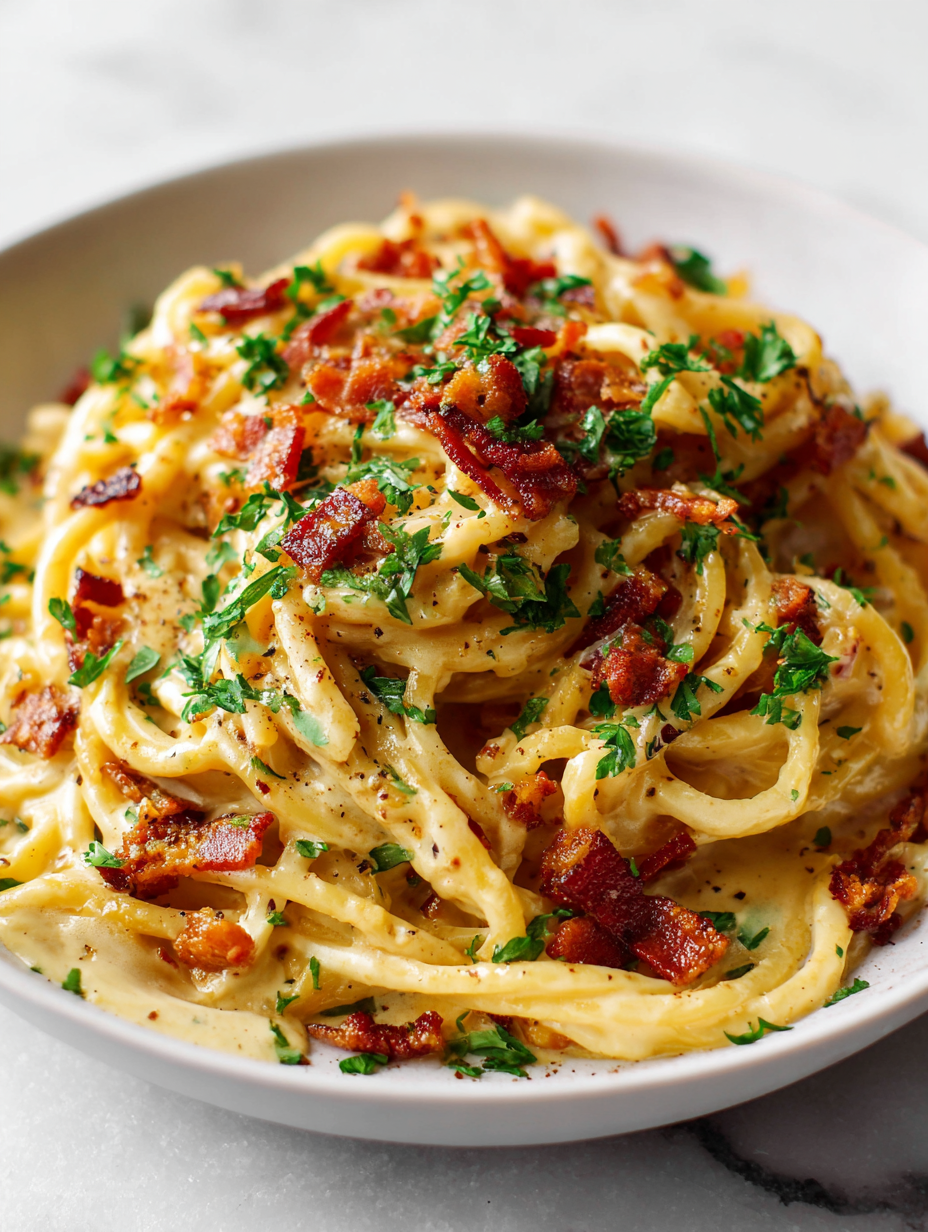
Vegan Carbonara
Ingredients
Equipment
Method
- Bring a large pot of salted water to a boil and cook the spaghetti until al dente, about 8-10 minutes. Drain and set aside, reserving a cup of pasta water.
- While the pasta cooks, drain a can of chickpeas, reserving the aquafaba in a bowl. Whisk the aquafaba vigorously with a whisk for 3-4 minutes until it becomes frothy, silky, and slightly thickened—this creates the vegan 'egg' base for the sauce.
- In a blender, combine the soaked cashews, water, nutritional yeast, and a pinch of salt. Blend until completely smooth and creamy, about 1-2 minutes. Set aside this rich cashew cream.
- Heat 1 tablespoon of olive oil in a large skillet over medium heat. Add the smoked paprika and cook for about 30 seconds until fragrant, filling your kitchen with smoky aroma.
- Pour the whipped aquafaba into the skillet. Gently cook and stir for about 2 minutes until it begins to thicken slightly and coats the back of a spoon, creating a glossy, velvety base.
- Stir in the blended cashew cream and black salt, mixing well to form a rich, cheesy sauce. Cook for another 2-3 minutes until the sauce is silky and glossy, with a smoky aroma.
- Add the drained pasta to the skillet. Toss gently to coat the noodles evenly with the sauce, adding reserved pasta water a little at a time until the sauce reaches your desired creamy consistency.
- Finish by drizzling a bit more olive oil over the pasta. Taste and adjust seasoning with black salt or pepper if needed. Garnish with cracked black pepper and serve immediately while hot and glossy.
Notes
Pro tips for vegan carbonara
- Whip aquafaba until frothy and silky, about 3-4 minutes on high speed, for the perfect emulsification.
- Use high-quality olive oil for the finishing drizzle; it enhances aroma and flavor with fruity, peppery notes.
- When sautéing smoked paprika, cook just 30 seconds until fragrant—avoid burning to prevent bitterness.
- Reserve a cup of pasta water before draining; it helps loosen the sauce and cling better to the noodles.
- Keep the heat moderate when adding aquafaba; too high can cause curdling, so aim for gentle simmering.
- Blend soaked cashews until completely smooth—tiny specks mean it’s not quite right, get it velvety for creaminess.
- Taste and adjust seasoning at the end—sometimes a pinch more black salt or nutritional yeast balances the dish perfectly.
Common mistakes and how to fix them
- FORGOT to measure aquafaba: Use ¾ cup for perfect silky texture, avoid runny sauce.
- DUMPED too much black salt: Use sparingly; overpowering sulfur flavor ruins the dish.
- OVER-TORCHED the garlic: Sauté over medium heat, 30 seconds until fragrant, avoid bitterness.
- FORGOT to reserve pasta water: Add gradually for ideal sauce consistency, prevents clumping.
Quick fixes and pantry swaps
- When sauce looks grainy, splash in a bit more pasta water to smooth it out.
- If aquafaba isn’t whipping well, chill the bowl and beaters beforehand.
- Patch over over-salted sauce with a squeeze of lemon or extra cashew cream.
- Splash olive oil on pasta if it clumps or looks dull after reheating.
- Shield delicate sauce from direct heat to prevent curdling or separation.
Prep, store, and reheat tips
- Prep the pasta: Cook until just al dente, then rinse with cold water and toss with a little olive oil to prevent sticking. Store in an airtight container for up to 2 days in the fridge.
- Make the sauce components: Whip aquafaba and prepare cashew cream ahead of time. Keep refrigerated for up to 24 hours; the aquafaba may lose some fluffiness but still works well.
- Refrigerate leftovers: Store the assembled vegan carbonara in a sealed container for up to 1 day. The sauce may thicken slightly, so stir in a splash of warm water or reserved pasta water when reheating.
- Reheating tips: Gently warm in a skillet over low heat, stirring constantly. The sauce will shimmer and become creamy again, but avoid high heat to prevent separation or curdling.
- Flavor development: The flavors deepen slightly after resting, so consider adding a small splash of lemon or nutritional yeast when reheating to refresh the brightness.
Top questions about vegan carbonara
1. Can aquafaba really replace eggs in this recipe?
Aquafaba whips into a silky foam that mimics eggs, giving the sauce its creamy texture.
2. What does black salt do for the flavor?
Black salt adds that sulfurous, eggy flavor, so use it sparingly—too much can overpower the dish.
3. How do I know when the pasta is done?
Cook the pasta until al dente, about 8-10 minutes, for that perfect bite that holds the sauce well.
4. Can I omit the smoked paprika?
Use smoked paprika for a deep smoky aroma—skip or substitute with cumin for a milder flavor.
5. How do I reheat the vegan carbonara without ruining the texture?
Reheat gently in a skillet, stirring constantly, until the sauce shimmers and regains creaminess.
6. Can I replace cashew cream with something else?
Cashew cream is made by blending soaked cashews with water until smooth, creating a rich, dairy-free base.
7. What can I use instead of nutritional yeast?
Yes, nutritional yeast provides cheesy umami, but miso paste can be a good substitute for a similar flavor.
8. Why should I save pasta water?
Reserving pasta water helps loosen the sauce, making it cling better to the noodles and enhancing flavor.
9. What indicates the sauce is ready?
The sauce should coat the pasta smoothly, with a velvety, glossy sheen and smoky aroma.
10. How can I adjust the smoky flavor?
For a less smoky flavor, reduce smoked paprika or substitute with sweet paprika for milder notes.
This vegan carbonara feels like a little rebellion—rich, smoky, and surprisingly indulgent without any dairy or eggs. It’s a reminder that plant-based dishes can be just as satisfying and full of flavor, especially when you lean into bold ingredients like black salt and smoked paprika.
Whenever I make this, I’m struck by how simple pantry staples can turn into something that tastes like a treat. It’s a comfort food that’s honest and straightforward, perfect for those nights when you want something warm and real but without the fuss.