
Growing up, dinners around the table meant big bowls of garlic noodles that smelled like home—rich, garlicky, and just a little bit indulgent. Making this vegan version feels like reclaiming that childhood comfort, but with a modern twist that keeps it light and fresh. It’s surprising how a simple handful of ingredients can stir up so many nostalgic feelings.
What I love about this recipe is how it transforms everyday pantry staples into something that feels like a warm, familiar hug. No fancy ingredients, no fuss—just honest, straightforward cooking. Plus, it’s super adaptable, perfect for when you crave comfort but want to keep it plant-based and bright.
Focusing on the nostalgic comfort of childhood dinners, this recipe elevates vegan garlic noodles into a dish that feels like a warm, flavorful hug from the past, but with modern, plant-based twists.
The story behind this recipe
- This recipe came together on a rainy evening when I was craving something familiar but wanted to keep it fresh and vegan. I remembered those childhood dinners of garlic noodles, the smell of garlic sizzling in oil, and the way everyone’s face lit up when I brought the bowl to the table. I wanted to recreate that warmth, but with simple, plant-based ingredients I keep on hand.
- Sometimes, I find inspiration in the chaos of my kitchen—adjusting flavors, balancing garlic and lemon, and perfecting that silky sauce. It’s funny how a dish so humble can evoke such nostalgia and pride. Sharing this version feels like passing down a secret I love to keep.
- heading
- story_type
Key ingredients and tips
- Garlic: I use lots of fresh, minced garlic—its pungent aroma and sharp bite really wake up the dish. Feel free to add more if you love that intense garlic punch.
- Noodles: I prefer using whole wheat or rice noodles for texture and flavor, but you can swap in zucchini noodles for a lighter, veggie-packed version—just don’t overcook them to keep that satisfying bite.
- Vegan Butter: I rely on a good plant-based butter to create a rich, slightly nutty base; if you want a lighter sauce, a splash of olive oil works but loses some creaminess.
- Soy Sauce: I opt for low-sodium soy sauce to avoid over-salting, but coconut aminos make a great gluten-free alternative with a milder, sweeter note—adjust to taste.
- Lemon Juice: I squeeze fresh lemon right before serving, adding a bright, zesty kick and balancing the garlic’s heaviness. Lime juice can be a fun twist if you prefer a more tart tang.
- Sesame Oil: Just a few drops of toasted sesame oil give a smoky, nutty aroma that really rounds out the dish—use sparingly, as it’s potent.
- Green Onions: I love tossing in sliced green onions at the end—they add a fresh, grassy note and a little crunch that cuts through the richness.
Spotlight on key ingredients
Garlic:
- I use lots of fresh, minced garlic—its pungent aroma and sharp bite really wake up the dish. Feel free to add more if you love that intense garlic punch.
- Noodles: I prefer using whole wheat or rice noodles for texture and flavor, but you can swap in zucchini noodles for a lighter, veggie-packed version—just don’t overcook them to keep that satisfying bite.
Vegan Butter & Soy Sauce:
- Vegan Butter: I rely on a good plant-based butter to create a rich, slightly nutty base; if you want a lighter sauce, a splash of olive oil works but loses some creaminess.
- Soy Sauce: I opt for low-sodium soy sauce to avoid over-salting, but coconut aminos make a great gluten-free alternative with a milder, sweeter note—adjust to taste.
Notes for ingredient swaps
- Vegan Butter: Swap with coconut oil for a slightly sweeter, tropical note—rich but less nutty.
- Soy Sauce: Use coconut aminos for a milder, sweeter flavor—gluten-free but less salty.
- Noodles: Zucchini noodles work well if you want lighter, vegetable-based bites—just don’t overcook to keep some chew.
- Lemon Juice: Lime juice gives a brighter, more tart punch—perfect if you want a different citrus zing.
- Sesame Oil: Toasted sunflower or avocado oil adds nutty aroma without the intensity—use sparingly for flavor.
- Garlic: Roasted garlic can add a mellow sweetness—swap in if you love a subtler garlic presence.
- Green Onions: Chives or shallots can add a different fresh, oniony note—try them if greens aren’t available.
Equipment & Tools
- Large pot: Boil noodles evenly and quickly.
- Skillet or wok: Cook garlic and sauce, toss noodles.
- Knife: Mince garlic finely for quick infusion.
- Measuring spoons and cup: Accurately measure soy, lemon juice, sesame oil.
- Tongs or pasta fork: Toss noodles for even coating.
Step-by-step guide to vegan garlic noodles
- Equipment & Tools: Gather a large skillet or wok (for even heat), a sharp knife (for garlic), a measuring cup (for liquids), and tongs or a pasta fork (for tossing).
- Bring a large pot of water to a rolling boil (about 100°C / 212°F). Salt generously—like the sea, it helps flavor the noodles.
- Add your noodles—rice or whole wheat—cook according to package instructions until just al dente (about 8-10 minutes). Drain and set aside, tossing with a bit of oil to prevent sticking.
- While pasta cooks, heat a tablespoon of neutral oil in your skillet over medium heat (around 160°C / 320°F). Add a generous 4-6 cloves minced garlic. Cook until fragrant—about 1 minute—don’t let it burn, or it turns bitter.
- In a small bowl, mix 2 tbsp soy sauce, 1 tbsp lemon juice, 1 tsp toasted sesame oil, and a pinch of sugar. Set aside.
- Once garlic is fragrant and slightly golden, add 2 tbsp vegan butter to the skillet. Let it melt, then pour in the sauce mixture. Stir well and cook for 1-2 minutes until the sauce thickens slightly and the garlic is coated.
- Add the drained noodles to the skillet. Toss vigorously with tongs or a fork to coat every strand evenly in the garlic sauce. Cook for another 1-2 minutes, allowing flavors to meld.
- Taste and adjust seasoning—more soy for saltiness, lemon for brightness, or garlic for punch. If the noodles stick, splash a little hot water and toss again.
- Remove from heat. Toss with sliced green onions and a sprinkle of toasted sesame seeds if you like. Let sit for 1 minute to let flavors settle.
- Finish with a quick taste—should be garlicky, bright, and slightly nutty. Serve immediately, hot and fragrant.
Serve immediately while hot. Garnish with sliced green onions and sesame seeds for added flavor and texture. No resting needed, just enjoy the fragrant heat.
How to Know It’s Done
- Noodles are al dente, not mushy or sticky.
- Garlic is fragrant and golden, not burnt or raw.
- Sauce coats noodles evenly, with a bright, savory aroma.
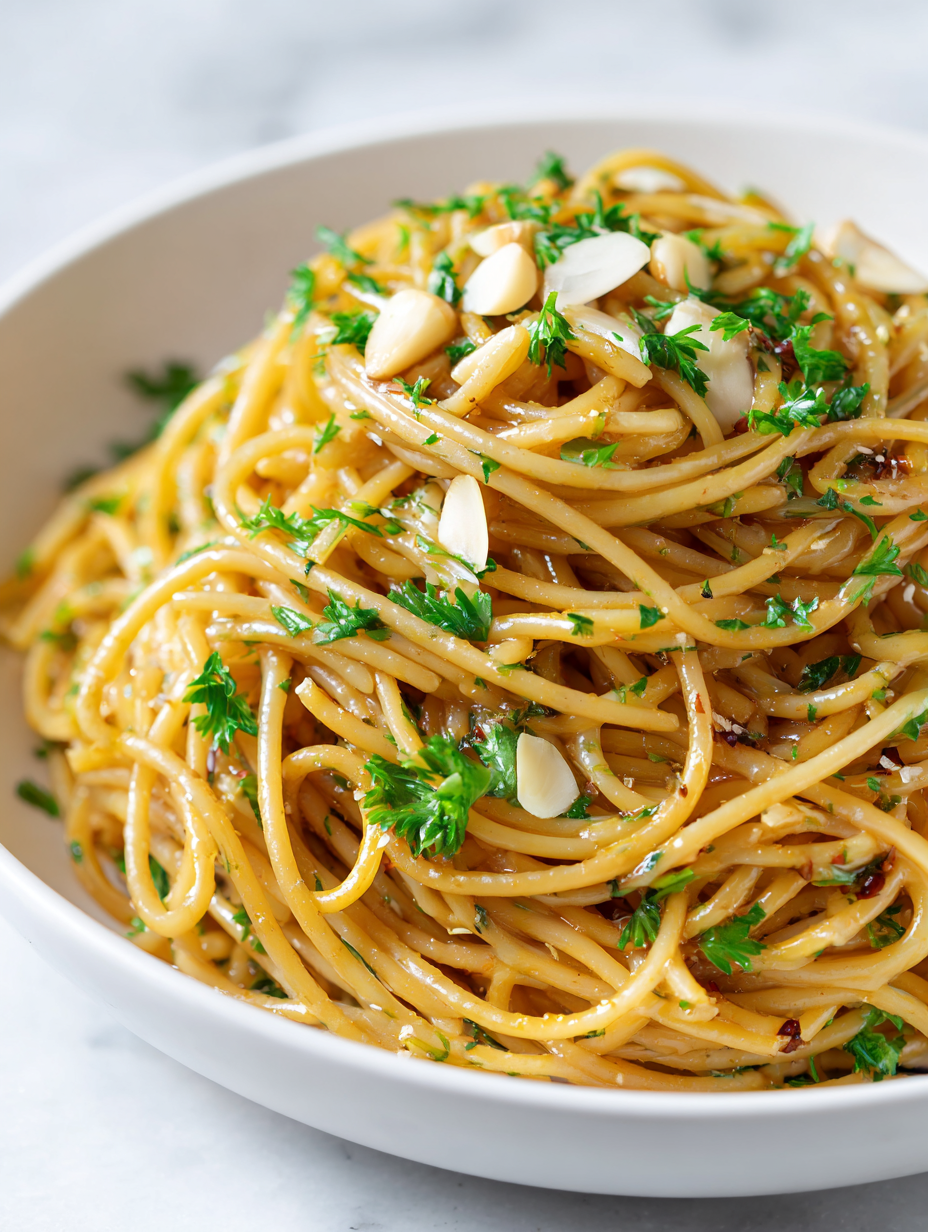
Vegan Garlic Noodles
Ingredients
Equipment
Method
- Cook the noodles in a large pot of salted boiling water until just al dente, about 8-10 minutes. Drain and toss with a little oil to prevent sticking.
- While the noodles cook, mince the garlic finely to release maximum aroma and set aside.
- Heat a tablespoon of vegan butter or coconut oil in a skillet or wok over medium heat until shimmering and fragrant.
- Add the minced garlic to the hot skillet, cooking for about 1 minute until fragrant and just golden, making a sizzling sound. Stir constantly to prevent burning.
- Pour in the soy sauce, lemon juice, and toasted sesame oil, stirring well to combine. Let the mixture simmer for 1-2 minutes until slightly thickened and fragrant.
- Add the drained noodles directly into the skillet, tossing vigorously with tongs or a fork to coat each strand evenly with the garlicky sauce. Cook for another 1-2 minutes, allowing flavors to meld.
- Remove from heat and transfer to serving bowls. Garnish with sliced green onions for a fresh, bright finish.
- Serve immediately while hot, enjoying the aroma of garlic and the silky texture of the noodles.
Pro tips for perfect garlic noodles
- garlic: Cook minced garlic over medium heat until fragrant and just golden to avoid bitterness.
- Taste as you go: Adjust soy and lemon in the skillet for a balanced, bright flavor—don’t wait until the end.
- Use tongs: Toss noodles vigorously to coat every strand evenly with sauce—this ensures flavor in every bite.
- Don’t overcrowd: Keep ingredients in a single layer when cooking garlic to prevent burning and ensure even flavor release.
- Save pasta water: Splash a spoonful if noodles stick or sauce needs loosening—starchy water enhances cling.
- Finish hot: Serve immediately to enjoy the garlic aroma and silky texture at its peak—resist the urge to wait.
Common mistakes and how to fix them
- FORGOT to preheat the pan → Ensure oil is shimmering before adding garlic.
- DUMPED too much soy sauce → Use a little at first, then adjust for saltiness.
- OVER-TORCHED garlic → Cook over medium heat to prevent bitterness.
- MISSED the sauce reduction → Let the sauce simmer until slightly thickened for flavor.
Quick fixes and pantry swaps
- When sauce is too thick, splash hot water and toss gently to loosen.
- Splash soy sauce into the pan if noodles taste bland—boosts umami instantly.
- Patch over burnt garlic with fresh minced garlic—quick stir and fragrant aroma returns.
- Shield delicate noodles from sticking by tossing with a little oil before reheating.
- If noodles are sticky, rescue with a quick rinse under hot water—shimmery and fresh again.
Prep, store, and reheat tips
- Prep the garlic and chop green onions ahead—store in airtight containers in the fridge for up to 2 days. Their fresh aroma really brightens the dish.
- Cook noodles in advance, drain, toss with a little oil to prevent sticking, and refrigerate in an airtight container for up to 24 hours. Reheat by tossing in hot water or briefly steaming.
- The garlic sauce can be made a day ahead; keep it covered in the fridge for up to 2 days. Reheat gently on low heat until warmed through, stirring often to prevent separation.
- Reheating noodles and sauce together: toss in a hot skillet for 1-2 minutes, adding a splash of water if they seem dry. Expect a slightly softer texture but still flavorful.
- For best flavor, reheat just before serving. The garlic aroma and bright zest of lemon will be less intense but still satisfying if warmed gently.
Top questions about vegan garlic noodles
1. Can I use garlic powder instead of fresh garlic?
Use fresh garlic for the best punch of flavor—pre-mincing makes it easier to cook evenly.
2. Can I substitute garlic powder?
Yes, but it won’t have the same pungency and aroma. Use half the amount and add towards the end for more flavor.
3. How do I add more flavor with green onions?
Absolutely. Sauté sliced green onions right at the end for a fresh, slightly sharp bite.
4. How do I prevent the noodles from getting mushy?
Cook the noodles just until al dente—overcooked noodles turn mushy and absorb too much sauce.
5. Should I rinse the noodles after cooking?
Toss the noodles immediately after adding the sauce to prevent clumping and sticking.
6. What’s a good soy sauce substitute?
You can replace soy sauce with coconut aminos for a milder, slightly sweeter umami flavor.
7. Can I use olive oil instead of neutral oil?
Use a neutral oil like canola or vegetable for sautéing; avoid strongly flavored oils that can overpower the garlic.
8. How do I fix sticky noodles?
Add a splash of hot water or stock if the noodles stick or the sauce becomes too thick during reheating.
9. How can I add a smoky flavor?
For a smoky flavor, add a few drops of smoked paprika or smoked salt during cooking.
10. How long can I store leftovers?
Serve immediately for the best aroma and texture, but leftovers keep well in the fridge for up to 2 days.
This dish isn’t just about garlic and noodles; it’s about capturing a moment of simple joy, a quick fix that somehow feels like a little celebration. Every time I make these, I’m reminded of how comforting familiar flavors can be, especially when they come together so effortlessly. It’s a reminder that good food often lives in the small, honest moments in the kitchen.
Sharing this recipe feels like passing on a little secret—something easy, satisfying, and rooted in memory. When those fragrant, garlicky noodles hit the plate, it’s like a warm hug from the past, with just enough brightness to keep it fresh. Perfect for when you need something quick but meaningful.