
This vegan orzo is like a blank slate, a way to showcase whatever seasonal vegetables and herbs I’ve got lying around. It’s surprisingly adaptable, turning simple leftovers into a dish that’s both comforting and vibrant. I love how it can be a quick weeknight meal or a laid-back brunch centerpiece, depending on what I toss in.
What really hooks me is how this dish transforms as the seasons change. In spring, I toss in tender peas and fresh mint; in summer, ripe cherry tomatoes and basil. It’s a recipe that invites creativity, making every batch feel fresh and personalized, even if I’m just improvising from what’s in the fridge.
It’s the kind of dish that feels like a little celebration of whatever’s around, without fuss or fussiness. The orzo itself is creamy and toothsome, soaking up the flavors of herbs and olive oil, while the vegetables add brightness and texture. It’s honest cooking, honestly satisfying, and a good reminder that a simple base can become something special with a little imagination.
Focusing on how this vegan orzo can be a canvas for seasonal vegetables and herbs, making it adaptable for any time of year and any fridge leftovers, turning simple ingredients into a comforting yet vibrant dish.
The story behind this recipe
- This vegan orzo started as a way to use up all the little odds and ends in my fridge. I wanted something quick, cozy, but also flexible enough to adapt to whatever vegetables I had that week. It’s funny how a simple pasta can become a canvas for so many flavors, depending on my mood or season.
- One night, I was tired of the usual and decided to toss in some leftover roasted zucchini and a handful of cherry tomatoes. The smell of garlic sizzling with the orzo, mingled with the sweetness of the tomatoes—something about that moment stuck with me. It was pure, honest cooking that felt like a small victory after a long day.
- The dish’s versatility is what keeps me coming back. It’s a reminder that you don’t need complicated ingredients to make something memorable. Just a little patience, a few good olive oils, and an eye for what’s fresh in the fridge—that’s all it takes.
Key ingredients and their secrets
- Orzo: I love how the tiny pasta absorbs flavors and gets a bit chewy—makes every bite feel hearty. If you prefer softer, cook a minute longer.
- Vegetable broth: It’s the flavor base that makes the orzo sing, especially with a smoky, umami kick. Swap in water if you’re out, but you’ll lose depth.
- Olive oil: This is my secret to richness and gloss. Use a good-quality extra virgin for that fruity, peppery punch—skimp here, and it shows.
- Garlic: The aroma of sizzling garlic is my favorite part—sharp and fragrant. Toast it just until golden; burnt garlic tastes bitter.
- Seasonal veggies: Whatever’s fresh and vibrant—zucchini, cherry tomatoes, spinach—these keep it lively. Frozen works in a pinch, just thaw and drain well.
- Lemon juice: Brightens everything up, especially if your dish feels a touch dull. Add at the end for a fresh, zingy finish. Skip if you prefer milder.
- Fresh herbs: Parsley, basil, mint—whatever’s available—add at the end for that burst of color and flavor. Dried herbs won’t give quite the same fresh lift.
Spotlight on key ingredients
Olive oil:
- Orzo: Tiny, rice-shaped pasta that soaks up flavors beautifully and gets a slight chew. Cook a minute longer for softer texture.
- My secret to richness and gloss. Use a good-quality extra virgin for that fruity, peppery punch—skimp here, and it shows.
- Lemon juice: Brightens everything up, especially if your dish feels a touch dull. Add at the end for a fresh, zingy finish.
Vegetable broth:
- Vegetables: Whatever’s fresh and vibrant—zucchini, cherry tomatoes, spinach—these keep it lively. Frozen works in a pinch, just thaw and drain well.
- The flavor base that makes the orzo sing, especially with a smoky, umami kick. Swap in water if you’re out, but you’ll lose depth.
Notes for ingredient swaps
- Broth: Veggie broth adds depth, but water with a splash of soy sauce or miso can work in a pinch, though you’ll lose some umami richness.
- Olive oil: Use avocado or grapeseed oil if you want a neutral fat that won’t overpower delicate flavors, but you might miss that fruity note.
- Garlic: Roasted garlic offers a sweeter, milder flavor, while garlic powder is quick and convenient but less aromatic during cooking.
- Vegetables: Frozen mixed vegetables can replace fresh if you’re in a rush; just thaw and drain well so they don’t water down the dish.
- Herbs: Dried parsley or basil can substitute fresh, but add them early to allow flavors to rehydrate and mellow out.
- Lemon juice: Lime juice gives a slightly different brightness—more tart and floral, but still keeps the dish lively.
- Vegan cheese or nutritional yeast: For cheesy umami, sprinkle in some nutritional yeast or a vegan cheese shreds; it adds creaminess and depth.
Equipment & Tools
- Large skillet or wide saucepan: To cook the orzo and vegetables evenly.
- Wooden spoon: For stirring and preventing sticking.
- Measuring cups and spoons: To accurately measure broth, oil, and seasonings.
Step-by-step guide to vegan orzo
- Gather your equipment: a large skillet or wide saucepan, a wooden spoon, and a measuring cup. The skillet should be big enough to hold all ingredients comfortably.
- Bring 4 cups (950 ml) of vegetable broth to a gentle simmer in your skillet over medium heat (about 70°C / 160°F). Keep it warm; you’ll add it gradually.
- While the broth heats, toast 1 tablespoon of olive oil in a separate pan over medium heat (about 70°C / 160°F). Add 2 cloves of minced garlic and cook until fragrant, about 1 minute. Be careful not to burn it—if it turns brown too quickly, lower the heat.
- Add 1 cup (200 g) of orzo to the toasted garlic and oil. Stir constantly for about 2 minutes until the orzo is lightly toasted and fragrant. It should turn a slightly golden hue; this enhances flavor.
- Start adding the warm broth, ladle by ladle, about ½ cup (120 ml) at a time. Stir constantly and wait for most of the liquid to absorb before adding more. Continue until the orzo is tender but still slightly al dente, about 20 minutes.
- During the last 5 minutes of cooking, stir in your choice of seasonal vegetables—think chopped zucchini, cherry tomatoes, or spinach. If using frozen, make sure to thaw and drain well before adding.
- Taste and adjust seasoning with salt and freshly ground black pepper. If you like, squeeze in a teaspoon of lemon juice for brightness. Remove from heat just before the orzo reaches your preferred texture.
- Let the orzo rest for 2 minutes, uncovered. Fluff gently with a fork and stir in chopped fresh herbs like parsley or basil. Drizzle with a little extra olive oil if desired.
- Serve the vegan orzo hot, garnished with more herbs or a drizzle of good olive oil. It should be creamy, with a slight chew, and vibrant in flavor.
Let the orzo rest off the heat for a couple of minutes, then gently fluff with a fork. Stir in fresh herbs and a splash of olive oil for added aroma and shine. Plate immediately while warm and fragrant.
How to Know It’s Done
- The orzo is tender but maintains a slight bite, with a creamy, glossy appearance.
- Vegetables are cooked but still vibrant and slightly crisp, not mushy.
- The broth is mostly absorbed, leaving the orzo moist and flavorful, not soupy or dry.
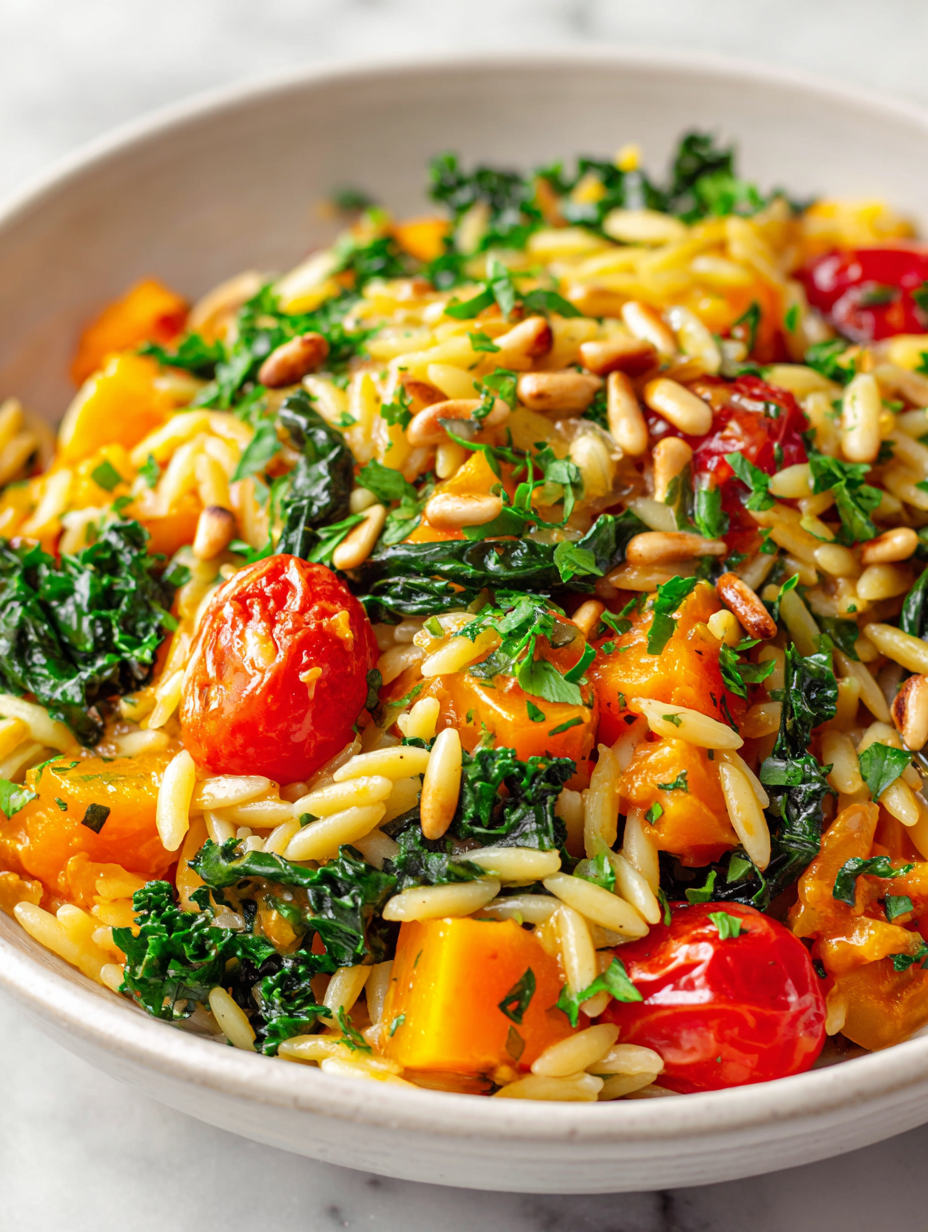
Seasonal Vegan Orzo
Ingredients
Equipment
Method
- Warm the vegetable broth in your skillet over medium heat until it’s gently simmering, about 5 minutes; keep it at a steady simmer as you'll add it gradually.
- Meanwhile, heat a tablespoon of olive oil in a separate pan over medium heat. Add the minced garlic and cook, stirring constantly, until fragrant and golden, about 1 minute. You should smell a rich aroma and see the garlic turn a light golden hue.
- Add the orzo to the garlic and oil, stirring constantly. Toast the pasta for about 2 minutes until it turns a light golden color and releases a nutty aroma.
- Begin adding the warm broth to the toasted orzo, ladle by ladle, about half a cup at a time. Stir continuously, allowing most of the liquid to absorb before adding more. Repeat this process until the orzo is tender and creamy, about 20 minutes.
- As the orzo nears doneness, stir in your chosen seasonal vegetables. If using frozen, make sure they’re thawed and drained. Cook for an additional 5 minutes until vegetables are vibrant and slightly tender.
- Remove the skillet from heat, then season with salt and pepper to taste. Squeeze in the lemon juice for brightness and stir gently to combine.
- Stir in chopped fresh herbs to add a burst of fresh flavor and color. Drizzle with a little extra olive oil if desired.
- Let the orzo rest for a couple of minutes, then gently fluff with a fork. The dish should be creamy, vibrant, and inviting.
- Serve the vegan orzo hot, garnished with additional herbs if you like. Enjoy the comforting, colorful bites packed with fresh flavors and textures.
Pro tips for vegan orzo
- Toast the orzo until golden to deepen flavor and add a nutty aroma.
- Stir constantly when adding broth to prevent sticking and ensure creamy, even cooking.
- Use high-quality extra virgin olive oil for richness and a fruity punch—don’t skimp.
- Add lemon juice at the end for a bright, zingy contrast that lifts the dish.
- Incorporate vegetables in the last 5 minutes for vibrant color and crisp-tender texture.
- Taste and adjust seasoning with salt and herbs before serving to balance flavors.
- Rest the orzo for 2 minutes off heat, then fluff gently for perfect texture and flavor.
Common mistakes and how to fix them
- FORGOT to stir often → Stir frequently to prevent sticking and ensure even cooking.
- DUMPED all broth at once → Add broth gradually for better absorption and creaminess.
- OVER-TORCHED the garlic → Cook garlic just until fragrant, not browned or burnt.
- MISSED seasoning adjustments → Taste and adjust salt and lemon at the end for balance.
Quick fixes and pantry swaps
- If the orzo sticks, splash in a little hot water and stir vigorously.
- When broth runs out too quickly, switch to simmering water with a dash of soy for umami.
- DUMPED too much lemon juice? Stir in a teaspoon of maple syrup or a pinch of sugar to balance.
- Overcooked vegetables? Quickly toss them in ice water to halt cooking and preserve color.
- When flavor is dull, add a pinch of smoked paprika or a splash of soy sauce for depth.
Prep, store, and reheat tips
- Prep the vegetables and chop herbs the night before; they’ll stay fresh and vibrant in the fridge for up to 24 hours, making assembly quicker.
- Cook and cool the orzo ahead of time, then store in an airtight container in the fridge for up to 2 days; it firms up slightly but reheats well.
- Store leftovers in a sealed container in the fridge for up to 3 days; the flavors meld and intensify slightly, becoming more savory.
- Reheat gently in a skillet with a splash of water or broth, stirring until heated through and fragrant—look for that glossy, moist appearance.
- For best flavor, add a squeeze of lemon or fresh herbs after reheating; the bright notes revive the dish’s freshness and aroma.
Top questions about vegan orzo
1. Can I use water instead of broth?
Use a good quality vegetable broth for richer flavor. Water works, but the dish won’t be as deep in taste.
2. Can I substitute other pasta types for orzo?
Yes, you can swap in gluten-free or other pasta shapes, but orzo gives that satisfying bite and absorbs flavors well.
3. How do I keep the orzo from sticking?
Stir the orzo frequently during cooking to prevent sticking. Keep the heat moderate and use a wide pan.
4. When should I add lemon juice?
Add lemon juice at the end of cooking to brighten the dish. If you add it too early, the flavor can dull as it cooks.
5. Can I use dried herbs instead of fresh?
Use fresh herbs like parsley or basil for the best flavor. Dried herbs can be used but won’t provide the same vibrant aroma.
6. How do I reheat leftover vegan orzo?
Reheat in a skillet with a splash of water or broth. Cover and warm gently, stirring occasionally until hot and fragrant.
7. What if my orzo is too dry or too soggy?
If your orzo turns out too dry, stir in a little hot water or broth. If too soggy, cook uncovered for a few minutes to evaporate excess moisture.
8. Can I add protein to this dish?
You can add cooked chickpeas or tofu for extra protein and texture, making it more filling.
9. Can I use frozen vegetables?
Yes, frozen vegetables work well — just thaw and drain thoroughly before mixing in to avoid excess water.
10. How do I know when the orzo is done?
Adjust seasoning to taste, especially salt and herbs. The dish should smell fragrant, and the orzo should be tender with a slight bite.
This vegan orzo isn’t just about the ingredients; it’s about the quiet moments in the kitchen—stirring, tasting, adjusting. It’s a reminder that simple, honest cooking can be a small act of care, especially when seasons and leftovers inspire the most memorable bites.
In a time when quick, nourishing meals are more important than ever, this dish offers a flexible, forgiving canvas. It’s about making something satisfying without fuss, and finding joy in the everyday process of turning humble ingredients into something that feels like a little celebration.